this series is part of my dissertation, funded by the ERC project ‘Expanding Agency: Women, Race and the Global Dissemination of Modern Architecture’ based in the UCD School of Art History and Cultural Policy
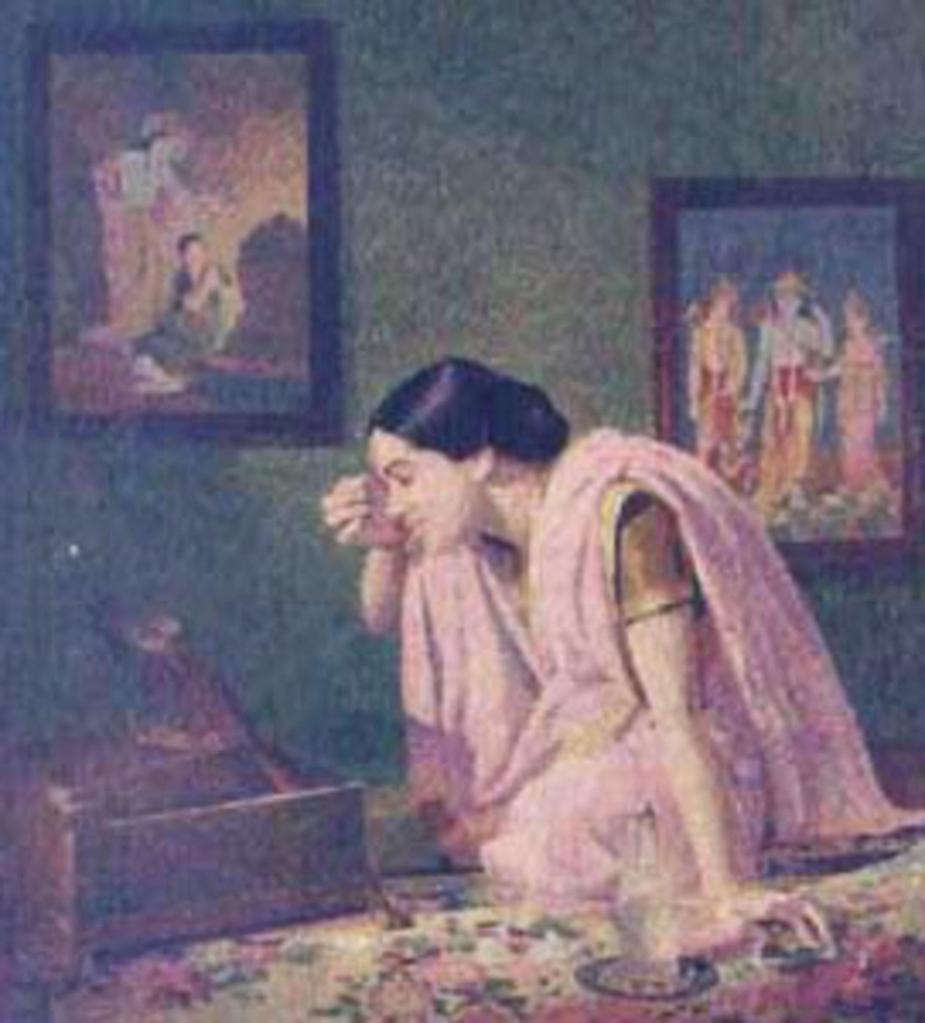
In 1930s Bombay, the burgeoning film industry played an important role in shaping a new type of Hindu bourgeois domesticity. Bhabhi (‘Sister-in-Law’, 1938) and Duniya Na Maane (‘The Unexpected’, 1937) were two of the first talkie films made in Hindi. The films focused on controversial social reform themes: Bhabhi on widow immolation and Duniya Na Maane on child marriage. The films relied on a transregional network of stories, Bhakti and sufi musical traditions, and existing inter-ocular relationships between print media and theatre to interrogate the crucial role of marriage in securing women’s access to shelter and safety within Hindu bourgeois society. In the onscreen homes of both films, explicitly Hindu objects such as brass lamps, flower garlands, incense sticks, and framed prints of Hindu deities blended seamlessly with electric lighting, clocks, gramophones, radios, and Art Deco armchairs. Made amidst the ongoing nationalist movement, Bhabhi and Duniya Na Maane peddled Hindu upper-caste modernity as pan-Indian and secular to working-class audiences from diverse religious backgrounds.

This project has received funding from the European Research Council (ERC) under the European Union’s Horizon 2020 research and innovation programme (Grant agreement No 101019419). Funded by the European Union. Views and opinions expressed are however those of the author(s) only and do not necessarily reflect those of the European Union or the European Research Council Executive Agency. Neither the European Union nor the granting authority can be held responsible for them.

